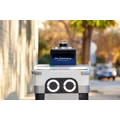
Robotics is an interdisciplinary field focused on the design, construction, operation, and application of robots. It integrates principles from mechanical engineering, electrical engineering, computer science, and artificial intelligence to develop systems that can perform tasks in environments that may be hazardous, repetitive, or inaccessible to humans.
Professionals in robotics work on creating machines that sense, process, and act on real-world data. This includes developing control systems, actuators, sensors, and software algorithms that enable robots to move, interact, and make decisions. Applications span industrial automation, healthcare, logistics, defense, agriculture, and consumer electronics.
- Design and implementation of robotic systems and control algorithms
- Integration of sensors, actuators, and embedded systems
- Programming for autonomous behavior and machine learning
- Simulation and testing in virtual and physical environments
- Collaboration with cross-functional teams in engineering and product development
Industries that commonly employ robotics expertise include manufacturing, automotive, aerospace, medical devices, and research institutions. Key roles include robotics engineer, automation specialist, control systems engineer, and mechatronics technician. Common tools and platforms include ROS (Robot Operating System), MATLAB, Simulink, Arduino, and various CAD and simulation software.
Individuals with robotics skills are expected to understand kinematics, dynamics, real-time systems, and feedback control. Proficiency in programming languages such as C++, Python, and Java is essential, along with familiarity with microcontrollers, signal processing, and AI techniques like computer vision and path planning. As automation grows across sectors, robotics expertise is increasingly valuable for improving efficiency, precision, and safety in complex operations.